트럼프는 왜 다시 석유를 선택했나
패권의 가격표
트럼프는 왜 다시 석유를 선택했나
트럼프의 에너지 정바카라을 보고 있으면 한 가지 의문이 생긴다.
기후변화가 더 이상 먼 미래의 이야기가 아닌 시대다. 빙하는 줄어들고 있고, 폭염과 가뭄, 홍수는 점점 더 큰 경제적 비용을 만든다. 태양광과 풍력의 발전단가는 과거보다 크게 낮아졌고, 전 세계는 전기차와 배터리, 에너지저장장치에 막대한 돈을 투자하고 있다.
그런데 미국은 다시 석유와 천연가스를 이야기한다.
왜일까?
가장 쉬운 답은 트럼프가 기후변화를 중요하게 생각하지 않기 때문이라는 것이다.
하지만 나는 그것만으로는 설명이 부족하다고 생각한다.
트럼프의 선택을 이해하려면 환경이 아니라 먼저 미국의 지도를 펼쳐봐야 한다.
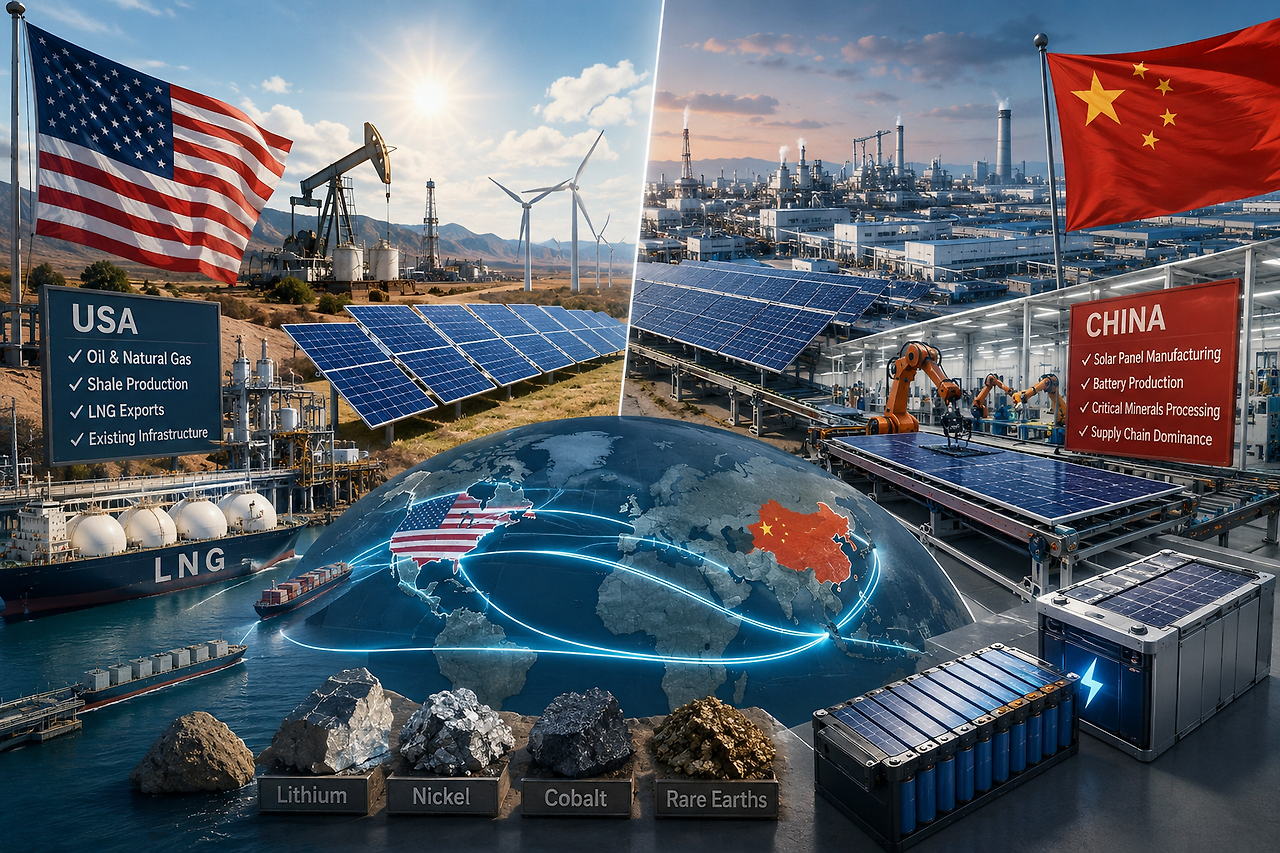
미국에는 석유가 있다.
그것도 아주 많이 있다.
2025년 미국의 원유 생산량은 하루 평균 1,360만 배럴로 다시 사상 최고치를 기록했다. 미국은 2018년 이후 세계 최대 원유 생산국의 자리를 유지하고 있다. 천연가스 역시 세계 최대 생산국이다. (미국 에너지 정보청)
이것은 단순히 땅속에 석유가 많이 묻혀 있다는 뜻이 아니다.
텍사스와 뉴멕시코에는 거대한 셰일 생산지역이 있다. 석유와 가스를 옮기는 파이프라인이 있고, 멕시코만 연안에는 정유시설과 석유화학단지가 있으며, LNG를 액화해 세계로 내보낼 수 있는 터미널도 있다.
그 위에는 엑손모빌과 셰브론 같은 기업이 있고, 이를 금융으로 뒷받침하는 자본시장이 있으며, 원유 가격을 거래하는 세계적인 시장도 있다.
즉 미국은 석유를 단순히 생산하는 국가가 아니다.
석유라는 에너지 체제 전체에서 막강한 힘을 가진 국가다.
그리고 이것이 트럼프의 선택을 이해하는 첫 번째 열쇠라고 생각한다.
미국은 이미 석유에서 이겼다
2025년 미국은 원유 생산 기록을 다시 경신했다.
같은 해 미국의 LNG 수출량도 하루 평균 약 150억 입방피트에 이르렀고, 미국은 호주와 카타르를 제치고 세계 최대 LNG 수출국의 위치를 유지했다. (미국 에너지 정보청)
석유와 천연가스에서만큼은 미국이 누구에게 허락을 받을 필요가 없다.
에너지를 생산할 수 있고, 운송할 수 있고, 정제할 수 있고, 수출할 수 있다.
전쟁이나 국제정세가 불안해졌을 때도 자국에서 상당 부분을 조달할 수 있다.
그리고 필요하다면 동맹국에 판매할 수도 있다.
에너지가 단순한 상품을 넘어 외교와 안보의 수단이 되는 순간이다.
트럼프는 이것을 숨기지도 않는다.
2025년 2월에는 아예 국가에너지지배위원회(National Energy Dominance Council)를 만들었다. 여기서 사용하는 표현부터 ‘에너지 독립’이 아니라 에너지 지배(Energy Dominance)다.
백악관은 값싸고 풍부한 미국산 에너지가 물가를 낮추고, 제조업을 되살리고, AI 경쟁력을 높이고, 국가안보를 강화하며, 동맹국과의 관계에서도 미국의 힘을 키운다고 설명한다. (The White House)
여기까지 보면 트럼프의 계산은 꽤 단순하다.
이미 내가 가진 것을 왜 쓰지 않는가?
석유는 공장을 움직인다
트럼프가 원하는 미국을 생각해보면 에너지정바카라은 더욱 이해하기 쉬워진다.
그가 원하는 것은 제조업이 돌아오는 미국이다.
철강공장이 돌아오고, 자동차를 미국에서 만들고, 반도체 공장이 들어오고, 데이터센터와 AI 인프라가 미국에 건설되는 것이다.
그런데 공장은 애국심으로 돌아가지 않는다.
전기가 필요하다.
그것도 아주 많은 전기가 필요하다.
그리고 기업에는 그 전기가 친환경적인가만큼 중요한 문제가 하나 더 있다.
싸고 안정적으로 공급되는가?
태양광과 풍력은 연료비가 없고 발전비용도 크게 낮아졌다. 그러나 발전량이 날씨와 시간에 따라 달라진다는 문제가 있다. 비중이 커질수록 송전망과 저장장치, 수요관리, 보완전원까지 함께 확대해야 한다.
트럼프 행정부는 이 지점을 매우 강하게 공격한다.
2025년 7월 백악관은 풍력과 태양광을 ‘비싸고 신뢰하기 어려운 에너지원’이라고 규정하며 관련 세제지원 축소를 추진했다. 그리고 그 이유 가운데 하나로 전력망의 안정성과 외국 공급망 의존을 들었다. (The White House)
물론 이것은 트럼프 행정부의 정치적 평가다.
재생에너지가 실제로 얼마나 비싸고 얼마나 불안정한지는 지역의 전력망, 저장장치, 발전원 구성에 따라 훨씬 복잡하게 따져야 한다.
하지만 중요한 것은 트럼프가 무엇을 보고 있는가다.
그가 보는 에너지는 탄소배출량보다 먼저 가격, 안정성, 제조업, 그리고 국가안보다.
그런데 미국에는 태양도 많다
여기서 이상한 점이 생긴다.
미국은 재생에너지가 부족한 나라가 아니다.
캘리포니아와 애리조나, 네바다의 햇빛은 강하다.
텍사스와 중부 대평원에는 엄청난 풍력자원이 있다.
북서부에는 수력이 있고, 서부에는 지열자원도 있다.
땅도 넓다.
자본도 있다.
기술도 있다.
그렇다면 미국은 화석연료와 재생에너지 가운데 하나만 골라야 하는 나라가 아니다.
둘 다 할 수 있는 나라다.
그럼에도 트럼프가 화석연료 쪽에 훨씬 큰 무게를 싣는 이유는 무엇일까?
나는 여기서부터 문제가 자원의 양이 아니라 산업의 소유권으로 바뀐다고 생각한다.
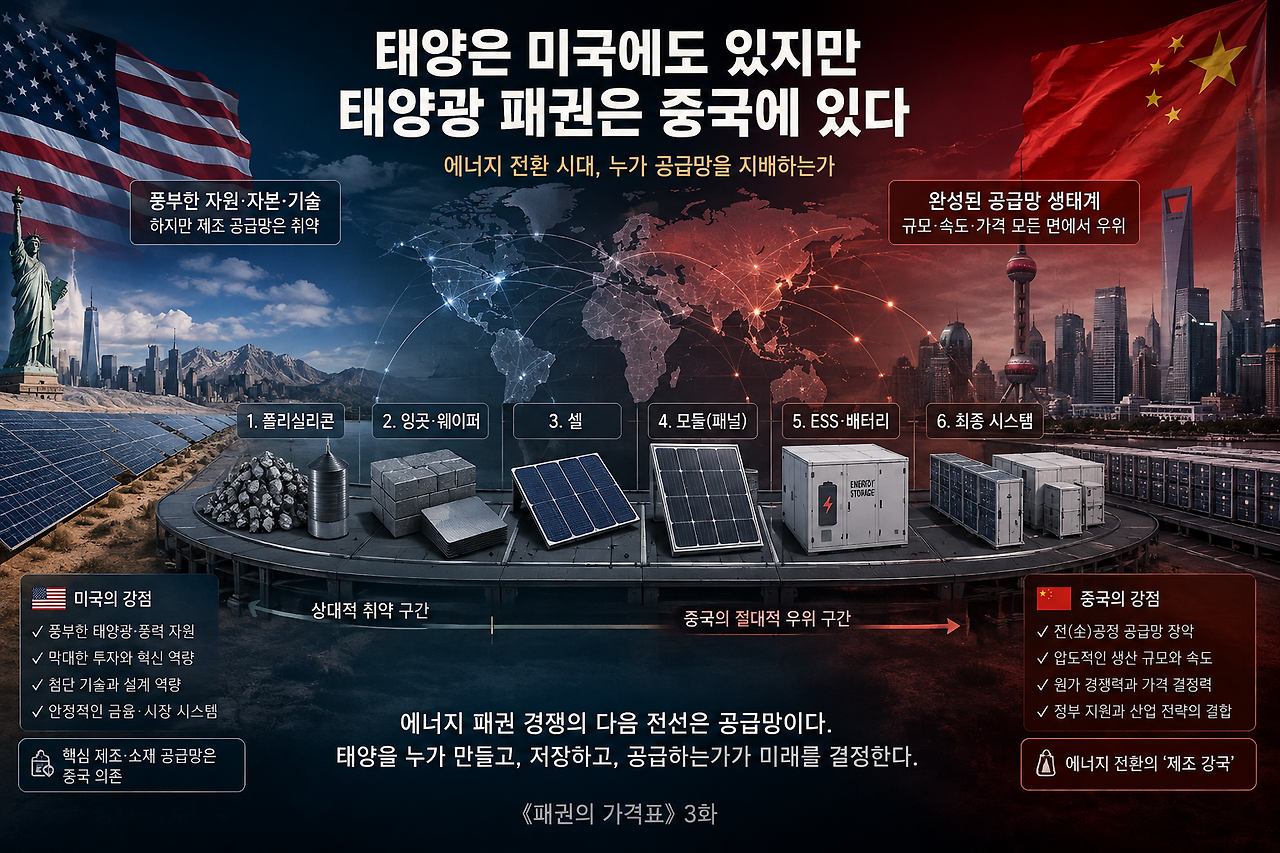
태양은 미국에도 있다.
하지만 태양광 패널을 만드는 산업은 미국이 지배하지 않는다.
석유를 쓰면 미국 산업이 움직인다
미국에서 원유를 더 생산하면 미국의 유전이 움직인다.
미국의 파이프라인이 움직이고, 미국의 정유시설이 움직이며, 미국의 LNG 터미널이 움직인다.
관련 설비와 서비스업체, 금융회사까지 거대한 기존 산업생태계가 함께 움직인다.
하지만 태양광 발전소를 하나 짓는 문제로 넘어가면 공급망이 달라진다.
폴리실리콘에서 잉곳과 웨이퍼, 셀과 모듈을 거치는 태양광 제조 공급망에서 중국은 압도적인 위치를 차지하고 있다.
ESS로 넘어가도 문제가 비슷하다.
태양광과 풍력의 비중이 높아질수록 전기를 저장하고 필요할 때 꺼내 쓰는 시스템의 가치가 커지는데, 현재 가장 빠르게 보급되고 있는 대규모 저장수단 가운데 하나가 리튬이온 배터리다.
그 배터리의 소재가공과 셀 제조에서도 중국은 막강하다.
핵심광물도 마찬가지다.
문제는 미국에 광물이 하나도 없어서가 아니다.
광물을 캐내고, 분리하고, 정제하고, 소재로 만들고, 다시 배터리와 부품으로 연결하는 중간 제조공정의 생태계에서 중국이 너무 강해졌다는 것이다.
그리고 트럼프 행정부 자신도 이를 국가안보 문제라고 말한다.
2025년 취임 첫날 발표한 에너지 행정명령에는 미국이 핵심광물과 희토류의 생산·가공 능력을 확대해 ‘적대적 국가’의 영향력을 줄여야 한다는 내용이 들어갔다. (The White House)
풍력과 태양광 지원을 줄이는 행정명령에서도 외국의 적대국이 통제하는 공급망에 대한 의존이 국가안보를 위협한다고 명시했다. (The White House)
그렇다면 트럼프가 바라보는 에너지전환은 우리가 흔히 생각하는 것과 조금 다를 수 있다.
석유에서 태양광으로 이동하는 것이 아니라, 미국이 지배하는 공급망에서 중국이 지배하는 공급망으로 이동하는 것처럼 보였을 가능성이다.
에너지 독립을 했더니 다시 중국에 의존한다면
한번 트럼프의 입장에서 생각해보자.
미국은 수십 년 동안 중동 석유에 대한 의존을 국가안보 문제로 생각했다.
그러다 셰일혁명이 일어났다.
미국의 원유와 천연가스 생산량이 폭발적으로 늘었다.
마침내 미국은 세계 최대 산유국이 됐다.
석유와 가스를 다른 나라에서 사오는 것을 걱정하던 국가에서, 다른 나라에 에너지를 판매하는 국가가 됐다.
그런데 이제 기후변화를 막기 위해 새로운 에너지 체제로 이동하라고 한다.
그곳에 들어가 보니 태양광 제조에서는 중국이 강하고, 배터리에서는 중국이 강하며, 광물 정제에서도 중국이 강하다.
트럼프의 입장에서는 이런 질문이 나올 수 있다.
우리는 왜 에너지 독립을 이루고 나서 다시 중국에 의존해야 하는가.
나는 이것이 트럼프의 석유정바카라을 이해하는 데 상당히 중요한 질문이라고 생각한다.
그렇다고 해서 그의 선택이 옳다는 뜻은 아니다.
다만 선택의 이유를 이해하지 않고 기후정바카라만으로 평가하면 트럼프의 에너지 전략에서 가장 중요한 부분을 놓칠 수 있다는 것이다.
과거의 패권인가, 미래의 패권인가
그리고 바로 여기서 문제가 복잡해진다.
트럼프의 선택에는 분명 경제적인 합리성이 있다.
미국은 자신이 이미 가장 잘하는 산업을 이용한다.
값싼 에너지를 공급하고, 제조업을 불러들이고, LNG를 수출하고, 중국에 대한 의존도를 낮춘다.
단기적으로 보면 꽤 매력적인 전략이다.
하지만 패권국은 오늘만 보고 움직일 수 있을까?
석유의 시대가 앞으로 수십 년 동안 계속된다면 미국의 선택은 성공할 수도 있다.
반대로 태양광과 배터리, ESS와 전력망, 전기차와 핵심광물이 앞으로 훨씬 더 큰 산업이 된다면 이야기가 달라진다.
미국이 자신이 강한 현재의 산업을 보호하는 동안 중국은 다음 에너지 산업의 생산능력을 더 쌓게 된다.
그러면 어느 순간 질문이 바뀐다.
미국은 석유 패권을 지키고 있는 것일까? 아니면 석유 패권을 지키기 위해 미래의 에너지 패권을 중국에 넘겨주고 있는 것일까?
나는 아직 답을 내리고 싶지 않다.
미국도 그 위험을 모르지는 않는다. 트럼프 행정부 역시 핵심광물의 미국 내 생산과 가공을 확대하려 하고 있고, 원전과 수력, 지열 같은 에너지원도 함께 강조하고 있다. 그러니 그의 정바카라을 단순히 ‘석유만 쓰자는 정바카라’으로 규정하는 것도 정확하지 않다. (The White House)
그럼에도 방향은 분명하다.
미국이 이미 경쟁력을 가진 에너지부터 최대한 사용하겠다는 것이다.
그래서 트럼프의 선택을 나는 이렇게 정리하고 싶다.
미국은 에너지가 부족해서 석유를 선택한 것이 아니다.
태양이 부족해서도 아니고, 바람이 부족해서도 아니다.
미국에는 둘 다 충분히 있다.
그보다 더 중요한 차이가 있었다.
석유에는 미국의 산업이 있었다.
태양광과 배터리에는 중국의 산업이 있었다.
어쩌면 트럼프가 바라본 것은 바로 그것이었을지 모른다.
태양과 바람은 누구의 것도 아니다.
하지만 그것을 전기로 바꾸는 패널과 터빈, 전기를 저장하는 배터리, 그 안에 들어가는 광물을 정제하는 공장에는 국적이 있다.
그리고 에너지마저 국가안보가 되어버린 시대에 그 국적은 중요해졌다.
2011년 국제통상론에서 이야기했던 경제의 블록화는 어쩌면 이런 모습이었을지도 모른다.
과거에는 어느 나라에서 가장 싸게 만들 수 있는지가 중요했다.
지금은 달라졌다.
누가 만드는가?
어느 나라가 만드는가?
전쟁이 나도 받을 수 있는가?
가격표에 없던 항목들이 가격을 결정하기 시작했다.
트럼프는 그 변화에 아주 빠르게 올라탄 정치인이다.
문제는 그가 선택한 석유의 가격표에도 우리가 아직 계산하지 않은 항목이 있다는 것이다.
탄소, 빙하, 바다 그리고 기후다.
네팔에서 무너진 빙하를 바라보며 시작했던 이야기가 다시 여기로 돌아온다.
미국은 석유에서 패권을 가지고 있다.
그렇다면 다음 질문은 이것이다.
태양광의 시대에도 미국은 패권국일까?
그 질문을 하려면 이제 중국을 봐야 한다.
다음 화
태양은 미국에도 있지만 태양광 패권은 중국에 있다
미국에는 햇빛도, 땅도, 자본도 있다.
그런데 왜 태양광 패널과 배터리의 공급망에서는 중국이 압도적인 위치에 올라섰을까?
3화에서는 석유에서 세계 최강이 된 미국과, 에너지 전환의 제조업에서 슈퍼파워가 된 중국을 비교해보려고 한다.
Episode 2
Why Trump Chose Oil Again
Watching Trump's energy policy, one question keeps coming up.
We're in an era where climate change is no longer a distant, future problem. Glaciers are shrinking. Heat waves, droughts, and floods carry ever-larger economic costs. The cost of generating solar and wind power has fallen dramatically compared to the past, and the world is pouring enormous sums into EVs, batteries, and energy storage.
And yet the United States is talking about oil and natural gas again.
Why?
The easiest answer is that Trump simply doesn't care about climate change.
But I don't think that explanation is enough on its own.
To understand Trump's choice, you first have to set the environment aside and unfold a map of America.
America has oil.
A lot of it.
In 2025, US crude oil production hit a new all-time high, averaging 13.6 million barrels a day. The US has held the title of world's largest crude oil producer since 2018. It's also the world's largest producer of natural gas.
This isn't just about how much oil sits underground.
Texas and New Mexico hold enormous shale-producing regions. There are pipelines to move oil and gas, refineries and petrochemical complexes along the Gulf Coast, and terminals that can liquefy gas and ship it out to the world.
On top of that sit companies like ExxonMobil and Chevron, capital markets that finance them, and global markets that trade crude oil prices.
In other words, America isn't just a country that produces oil.
It's a country with formidable power across the entire oil-based energy regime.
And I think that's the first key to understanding Trump's choice.
America Has Already Won at Oil
In 2025, the US broke its crude oil production record again.
That same year, US LNG exports reached roughly 15 billion cubic feet a day, and the US held onto its position as the world's largest LNG exporter, ahead of Australia and Qatar.
When it comes to oil and gas, the US doesn't need anyone's permission.
It can produce energy.
Transport it.
Refine it.
Export it.
Even when wars or geopolitical instability strike, it can source a substantial share domestically.
And if it wants to, it can sell energy to its allies.
That's the moment energy stops being just a commodity and becomes a tool of diplomacy and security.
Trump doesn't hide this.
In February 2025, he established the National Energy Dominance Council. Notice the language itself — not "energy independence," but Energy Dominance.
The White House frames it this way: cheap, abundant American energy lowers prices, revives manufacturing, boosts AI competitiveness, strengthens national security, and grows America's leverage with its allies.
Seen this way, Trump's logic is fairly straightforward.
Why not use what I already have?
Oil Runs the Factories
Trump's energy policy becomes easier to understand once you consider the America he wants to build.
He wants an America where manufacturing comes back.
Steel plants returning.
Cars built in America.
Semiconductor fabs moving in.
Data centers and AI infrastructure built on US soil.
But factories don't run on patriotism.
They need electricity.
A lot of it.
And for companies, there's a question that matters just as much as whether that electricity is clean.
Is it cheap and reliable?
Solar and wind have no fuel cost, and generation costs have dropped sharply. But their output varies with weather and time of day. As their share of the grid grows, you also need to expand transmission lines, storage, demand management, and backup power sources alongside them.
The Trump administration attacks this point hard.
In July 2025, the White House labeled wind and solar "expensive and unreliable" energy sources and pushed to cut related tax incentives — citing grid stability and dependence on foreign supply chains as part of the justification.
Of course, that's the Trump administration's political framing.
How expensive or unreliable renewables really are depends heavily on a region's grid, storage capacity, and generation mix — it's a far more complicated calculation than the administration's talking points suggest.
But what matters here is what Trump is actually looking at.
Before carbon emissions, the energy he sees is measured by:
Price.
Reliability.
Manufacturing.
And national security.
But America Also Has Plenty of Sun
Here's where things get strange.
America isn't short on renewable resources.
California, Arizona, and Nevada get intense sunlight.
Texas and the central plains have enormous wind resources.
The Pacific Northwest has hydropower, and the West has geothermal resources too.
The land is vast.
The capital is there.
The technology is there.
So America isn't a country that has to choose between fossil fuels and renewables.
It's a country that could do both.
So why does Trump put so much more weight on the fossil fuel side?
I think this is where the issue shifts from how much of a resource you have to who owns the industry.
The sun shines on America too.
But America doesn't dominate the industry that turns sunlight into solar panels.
Using Oil Puts American Industry to Work
When the US produces more crude oil, American oil fields go to work.
American pipelines go to work.
American refineries go to work.
American LNG terminals go to work.
The equipment makers, service companies, and financial firms tied to all of it — an entire existing industrial ecosystem — moves together.
But shift to building a solar power plant, and the supply chain looks completely different.
In the solar manufacturing chain — from polysilicon to ingots and wafers, to cells and modules — China holds an overwhelming position.
The same story repeats with energy storage systems.
As solar and wind make up a bigger share of the grid, the value of systems that store electricity and release it when needed grows — and right now, one of the fastest-growing large-scale storage technologies is the lithium-ion battery.
China is also dominant in processing the materials for those batteries and manufacturing the cells.
Critical minerals follow the same pattern.
The issue isn't that America has no minerals at all.
It's that China has become overwhelmingly strong across the midstream manufacturing ecosystem — mining, separating, refining, turning minerals into materials, and linking them back into batteries and components.
And the Trump administration itself calls this a national security issue.
The energy executive order signed on Trump's first day in office in 2025 included language calling for the US to expand its own production and processing capacity for critical minerals and rare earths in order to reduce the influence of "hostile nations."
The executive order cutting support for wind and solar likewise stated explicitly that dependence on supply chains controlled by hostile foreign nations threatens national security.
If that's the case, the energy transition Trump is looking at may be a little different from how we usually picture it.
Rather than a shift from oil to solar, it may look, in his eyes, like a shift from a supply chain America dominates to one China dominates.
What If Energy Independence Just Means Depending on China Again
Let's try thinking from Trump's position for a moment.
For decades, the US treated its dependence on Middle Eastern oil as a national security problem.
Then the shale revolution happened.
US crude oil and natural gas production exploded.
The US finally became the world's largest oil producer.
A country that once worried about buying oil and gas from others became a country that sells energy to others.
And now, to fight climate change, it's being told to shift to a new energy regime.
Step into that regime, and China turns out to be strong in solar manufacturing,
strong in batteries,
and strong in mineral refining.
From Trump's perspective, a question naturally follows:
Why should we achieve energy independence only to become dependent on China all over again?
I think this is a genuinely important question for understanding Trump's oil policy.
That doesn't mean his choice is the right one.
But if you evaluate his energy strategy purely through the lens of climate policy, without understanding the reasoning behind the choice, you risk missing the most important part of it.
Hegemony of the Past, or Hegemony of the Future
And this is exactly where things get complicated.
There's clear economic logic in Trump's choice.
America is leveraging the industry it's already best at.
Supplying cheap energy.
Bringing manufacturing back.
Exporting LNG.
Reducing dependence on China.
In the short term, it's a fairly attractive strategy.
But can a hegemon afford to move by only looking at today?
If the age of oil continues for the next several decades, America's choice could pay off.
But if solar, batteries, energy storage, grids, EVs, and critical minerals become far bigger industries going forward, the story changes.
While America protects the industry where it's strong today, China keeps building up its production capacity for tomorrow's energy industries.
At some point, the question shifts.
Is America defending its oil hegemony?
Or is it
handing over future energy hegemony to China in order to defend its oil hegemony?
I don't want to answer that yet.
To be fair, America isn't blind to that risk. The Trump administration is also pushing to expand domestic production and processing of critical minerals, and is emphasizing energy sources like nuclear, hydro, and geothermal alongside oil. So it wouldn't be quite accurate to describe his policy as simply "let's just burn oil."
Still, the direction is clear.
Use, as fully as possible, the energy America is already competitive in.
So here's how I'd sum up Trump's choice.
America didn't choose oil because it lacks energy.
Not because it lacks sun.
Not because it lacks wind.
It has plenty of both.
There was a more important difference at play.
Oil had America's industry behind it. Solar and batteries had China's industry behind them.
That may be exactly what Trump was looking at.
Sunlight and wind belong to no one.
But the panels and turbines that turn them into electricity,
the batteries that store that electricity,
and the factories that refine the minerals that go inside them —
those have a nationality.
And in an era where even energy has become a matter of national security, that nationality has come to matter.
The blocization of the economy that came up in that international trade class back in 2011 — this may be exactly what it looks like in practice.
In the past, what mattered was which country could make something the cheapest.
That's changed now.
Who makes it. Which country makes it. Can you still get it even if a war breaks out.
Line items that never used to appear on a price tag have started to determine the price itself.
Trump is a politician who has jumped onto that shift very quickly.
The problem is that the price tag on the oil he chose still has line items we haven't calculated yet.
Carbon.
Glaciers.
The ocean.
And climate.
The story that began with the collapsed glacier in Nepal comes back around here.
America holds hegemony in oil.
So the next question is this:
Will America still be the hegemon in the age of solar power?
To answer that, we now need to look at China.
Next Episode
The Sun Shines on America Too, But China Holds Solar Hegemony
America has sunlight, land, and capital.
So why has China risen to such an overwhelming position in the supply chains for solar panels and batteries?
In Episode 3, we compare America — the undisputed champion of oil — with China, the superpower of energy-transition manufacturing.