Remebering the Korean War
In Gapyeong
<A Legacy of Sacrifice and Friendship: Remembering the Korean War in Gapyeong>
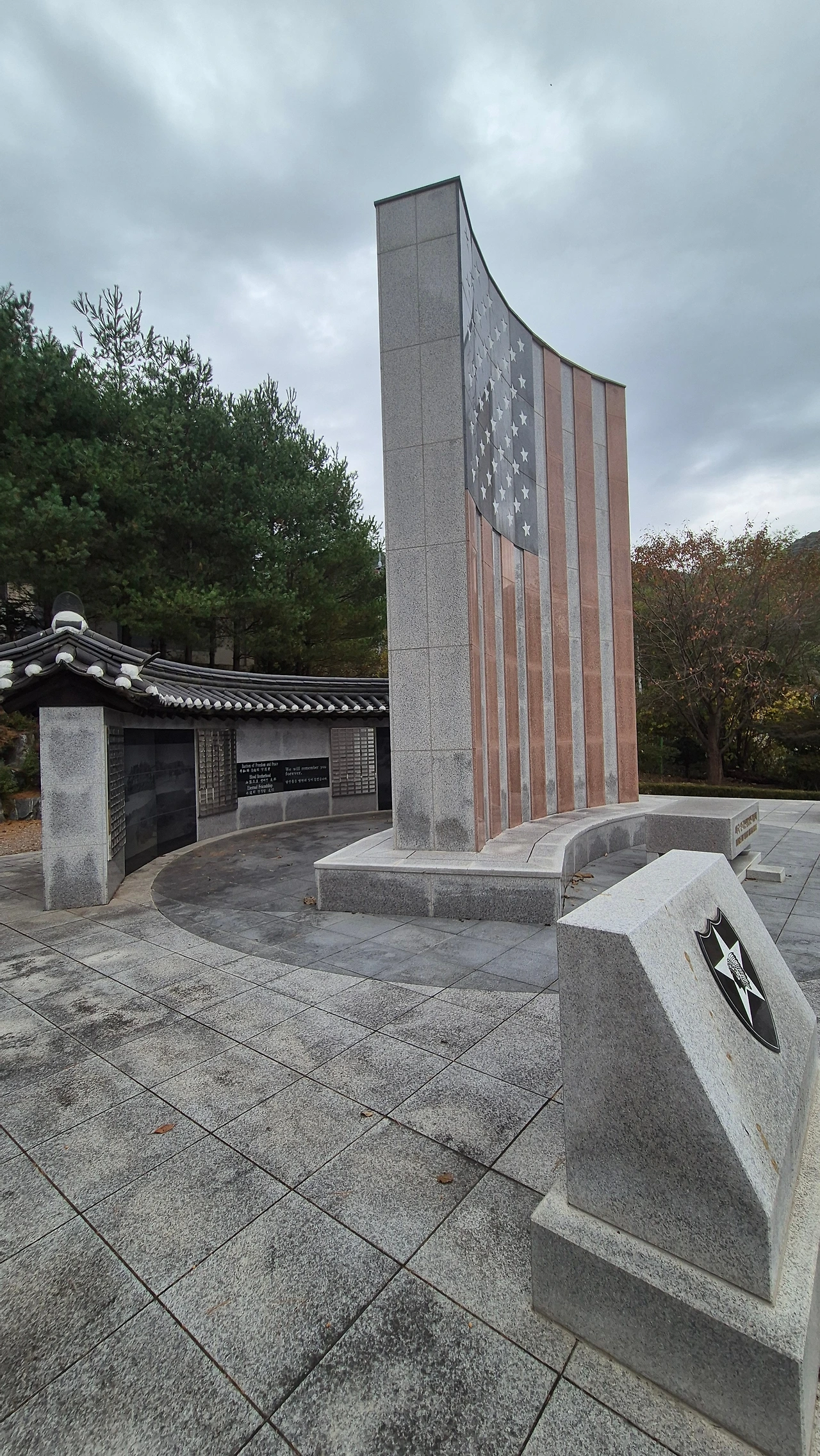
On a weekend in October, a few Korean friends and I visited the U.S.A. Korean War Memorial Monument in Gapyeong with an American friend. Despite having visited Gapyeong several times before, I had never known the monument existed. It was only while planning our trip together that I discovered this place and the history it represented. What began as an ordinary weekend excursion became an opportunity to reflect on a part of Korea’s past that I had largely overlooked.
For most Koreans and international visitors, Gapyeong is best known for Nami Island, water sports and makguksu, a local buckwheat noodle dish. Situated within easy reach of Seoul, it is a popular destination for those seeking a brief escape from the city. Like many others, I had come to associate Gapyeong with leisure and recreation. I had never considered how deeply this seemingly peaceful town was connected to the history of the Korean War and to the relationship between South Korea and the United States.
Yet Gapyeong’s significance extends far beyond its familiar tourist attractions. In April 1951, United Nations forces—including American, British, Canadian, Australian, and other allied troops—fought to halt the advance of Chinese and North Korean forces toward Seoul. The battle was part of a broader and brutal struggle in which control of territory, roads, and river crossings could determine the fate of the capital and, by extension, the future of the Republic of Korea.
The fighting was severe. Soldiers faced difficult terrain, harsh weather, and an enemy determined to press forward. The outcome was not simply a military victory; it was a defense of a nation still fragile in its early years. For South Korea, a country that had been invaded, devastated, and divided, the battle represented another moment in which its survival depended on the courage and sacrifice of those willing to fight alongside its people.
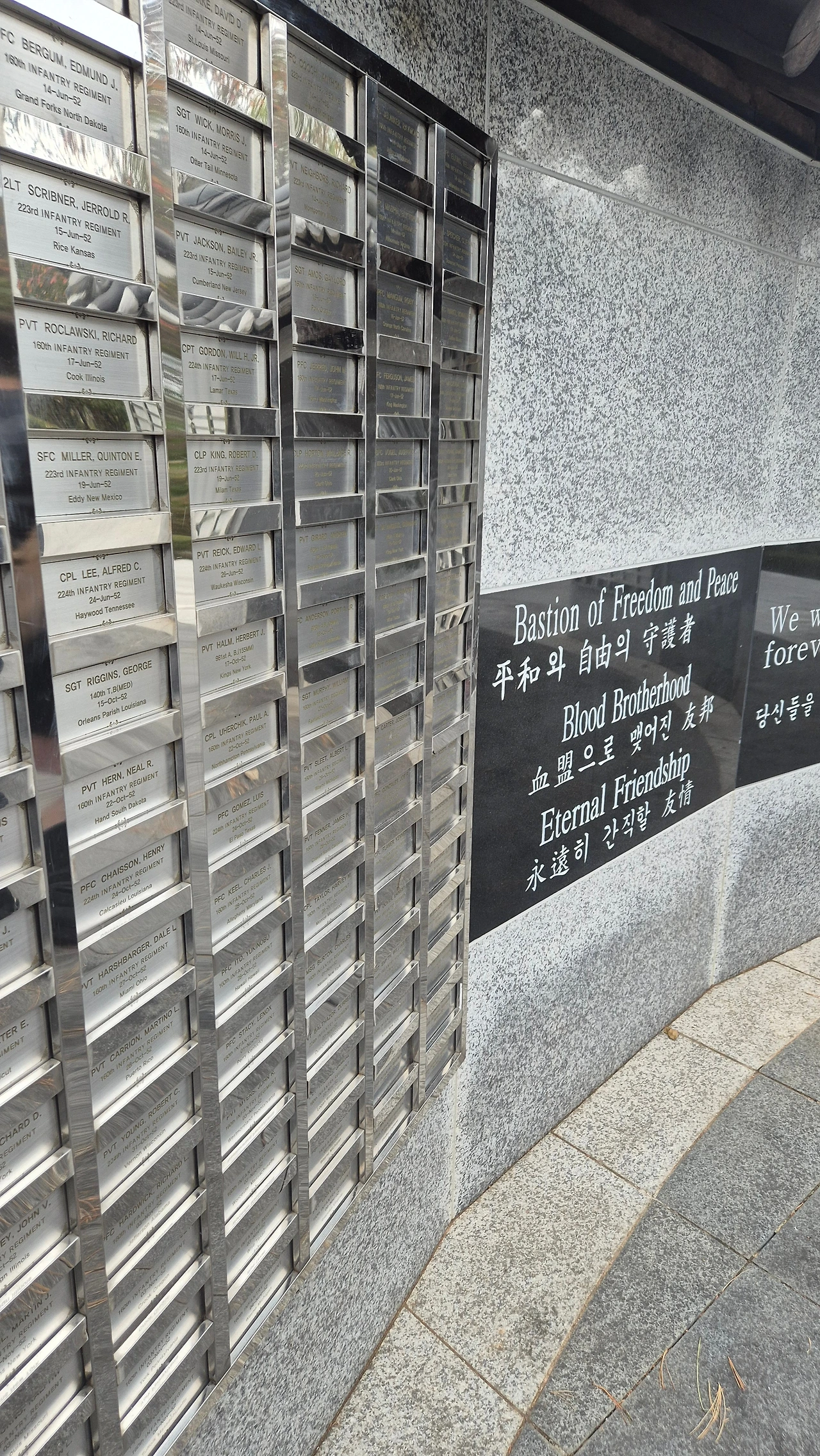
Standing before the memorial, my friends and I read aloud the names and hometowns of the American soldiers commemorated there, reflecting on the lives behind each name. The inscription, “Freedom Is Not Free,” served as a powerful reminder of the sacrifices made in defense of South Korea. In that moment, we felt a renewed sense of gratitude for the Americans who had traveled far from home to fight for a country that was not their own.
The town’s connection to the United States extends beyond the battlefield. In 1952, while the Korean War was still underway, American soldiers stationed in the region helped establish a school that would become Gapyeong High School. According to historical accounts, approximately 15,000 members of the U.S. Army’s 40th Infantry Division contributed $2 each toward the project. With additional assistance from Army engineers and donated equipment, the school was built to provide local students with a place to continue their education amid the devastation of war. It was named Kenneth Kaiser Middle and High School in memory of Sergeant Kenneth Kaiser Jr., a member of the division who had been killed in Korea. The institution later became known as Gapyeong High School.
The legacy of this history can also be found in Kaiser-gil, a road in Gapyeong named in honor of Kenneth Kaiser Jr. His name endures not only through the school established in his memory, but also in the landscape of the community he never lived to see flourish. Together, the school and the road offer a poignant reminder that the legacy of American servicemen in Korea extends beyond their sacrifices on the battlefield. It also lives on in the communities they helped rebuild and in the generations whose futures their service helped make possible.
This story stayed with me. The American soldiers who supported the school were not only remembering a war; they were helping to create conditions for peace. Their generosity helped shape the lives of generations of local students. For young people in Gapyeong, the school became a place to learn, dream, and prepare for futures that their parents and grandparents might not have been able to imagine amid the devastation of war.
In Gapyeong, I thought about how easily such stories can fade from public consciousness. The Korean War is often called “the Forgotten War,” particularly in the United States, where it was overshadowed by World War II before it and the Vietnam War after it. In South Korea, too, the war can feel distant to younger generations who have grown up in a prosperous, democratic country. The prosperity of contemporary Korea can make it difficult to imagine how recently the nation was poor, vulnerable, and fighting for its existence.
In recent decades, South Korea has become one of the world’s most appealing travel destinations. American visitors come to experience Seoul’s vibrant neighborhoods, Busan’s coastal scenery, and the country’s globally influential food, music, film, and television. These attractions reflect a nation that has emerged as a cultural and economic force. Yet to fully appreciate modern Korea, one must also understand the history that shaped it. South Korea’s transformation from a war-torn nation into a prosperous democracy was neither inevitable nor achieved without tremendous sacrifice. The Korean War, and the international support that helped the country survive and rebuild, remain central to this story.
This is why I hope more Americans and Koreans will venture beyond familiar destinations such as Seoul and Busan to discover places like Gapyeong. Historical sites bring the past into focus by connecting major events with the communities and individuals whose lives they shaped. In Gapyeong, a memorial honors those who fought to defend South Korea, while the story of Gapyeong High School illustrates how American servicemen helped nurture the country’s future even as the war continued. Together, these sites reveal a legacy that extends beyond the battlefield to encompass education, recovery, and hope for generations to come.
This shared history also offers a deeper understanding of the enduring alliance between South Korea and the United States. Although the alliance is often discussed in terms of military cooperation, regional security, and strategic interests, its foundations extend beyond policy and diplomacy. They are rooted in the sacrifices of those who defended South Korea and the acts of generosity that helped its people rebuild. For Koreans, remembering the war means recognizing the human cost of the freedom and prosperity they enjoy today. For Americans, it is an opportunity to understand the lasting impact of their country’s commitment to a nation far from home. Preserving these memories allows both countries to appreciate not only what they have shared, but also the responsibilities they carry toward future generations.
Leaving Gapyeong, I was struck by how the legacy of wartime sacrifice continues to shape the community today. The veterans who fought there deserve to be remembered not only at national memorials and official ceremonies, but also in the communities where their sacrifices continue to hold meaning.
I offer my deepest gratitude and respect to all those who served and sacrificed during the Korean War, particularly those who fought in the Battle of Gapyeong. Their courage helped defend a nation whose subsequent transformation stands as a remarkable chapter in modern history. Their legacy reminds us that the relationship between South Korea and the United States is more than a strategic partnership: it is a shared human story shaped by sacrifice, generosity, and a commitment to a future that once seemed uncertain.
In Gapyeong, a memorial honors those who fought for Korea’s freedom, a school preserves the legacy of those who helped build its future, and Kaiser-gil keeps alive the memory of Kenneth Kaiser Jr., the American soldier in whose honor the school was named. Together, these landmarks tell a story that extends beyond the battlefield—a story of sacrifice, generosity, and a shared commitment to Korea’s future. They remind us that the alliance between South Korea and the United States is sustained not only by shared interests, but also by a shared history and the willingness of each new generation to remember it.