10/18(Sun) The Opium Wars
#TheOpiumWar
Opium Wars and HMS Warships (1839–1860)
The Opium Wars were two conflicts between Qing China and Western powers, primarily Britain, in which the Royal Navy’s HMS warships played a decisive role.
HMS stands for His Majesty’s Ship, the prefix used for commissioned British Royal Navy ships during the reign of a king.
Key HMS ships in the Opium Wars
Ship Historical significance
HMS Nemesis (technically not HMS)
Iron-hulled, steam-powered vessel famous for its role in the First Opium War
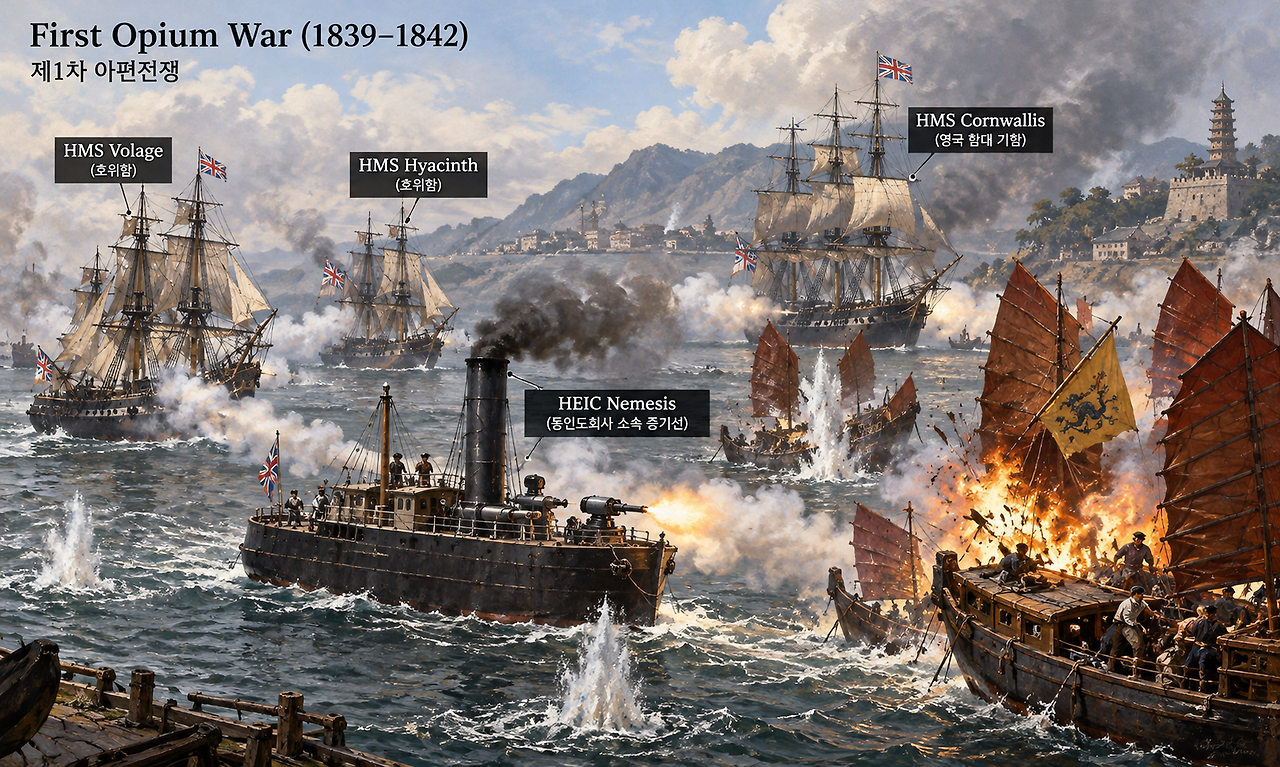
HMS Volage Participated in the 1839 Battle of Kowloon and other early clashes
HMS Hyacinth Fought alongside Volage in the opening confrontations
HMS Cornwallis British flagship associated with the 1842 Treaty of Nanking
HMS Wellesley 74-gun ship of the line that participated in British operations
HMS Calcutta British warship involved in the Second Opium War
The most famous vessel: Nemesis
The Nemesis was particularly important because it could navigate shallow rivers, move without relying on wind, and attack Chinese coastal defenses.
It belonged to the East India Company, so its proper designation was HEIC Nemesis, not HMS Nemesis.
The First Opium War ended in 1842 with the Treaty of Nanking, signed aboard HMS Cornwallis. China ceded Hong Kong Island to Britain and opened five treaty ports.
#TreatyofNanking
#HMS_Cornwallis
Are you interested in a particular HMS ship, the British naval battles against China, or how British warships defeated the Qing navy?
#QingNavy
#TheOpiumWars
#HMS_Nemesis
이 작가의 멤버십 구독자 전용 콘텐츠입니다.
작가의 명시적 동의 없이 저작물을 공유, 게재 시 법적 제재를 받을 수 있습니다.
공저: GYBM인재사관학교 /2026년 5월 출간

오직 멤버십 구독자만 볼 수 있는,
이 작가의 특별 연재 콘텐츠
- 최근 30일간 273개의 멤버십 콘텐츠 발행
- 총 839개의 혜택 콘텐츠